 EN


Conveyor Belt Mistracking: Septem Causae et Ordo Corrigendi Eorum
Problema mistracking cinguli fere numquam est problema cinguli. Est problema structurae, oneris aut accumulationis materiae, quod in margine cinguli apparet; ordo vero, quo causas inspicis, determinat utrum corrigatur in una postmeridie an bis hoc anno pecuniam expendas.
Responsum celerem
- Insicere structuram, onus et accumulationem materiae ante quam idler ad adiuvandum cingulum tangas. Plurima defecta allignment cinguli ab his initiunt.
- Cingulum quod solummodo movetur dum oneratum est habet problema oneris, non idler.
- Si margo usque ad carcassum attritus est, nulla regula eum servabit. Replacebitur.
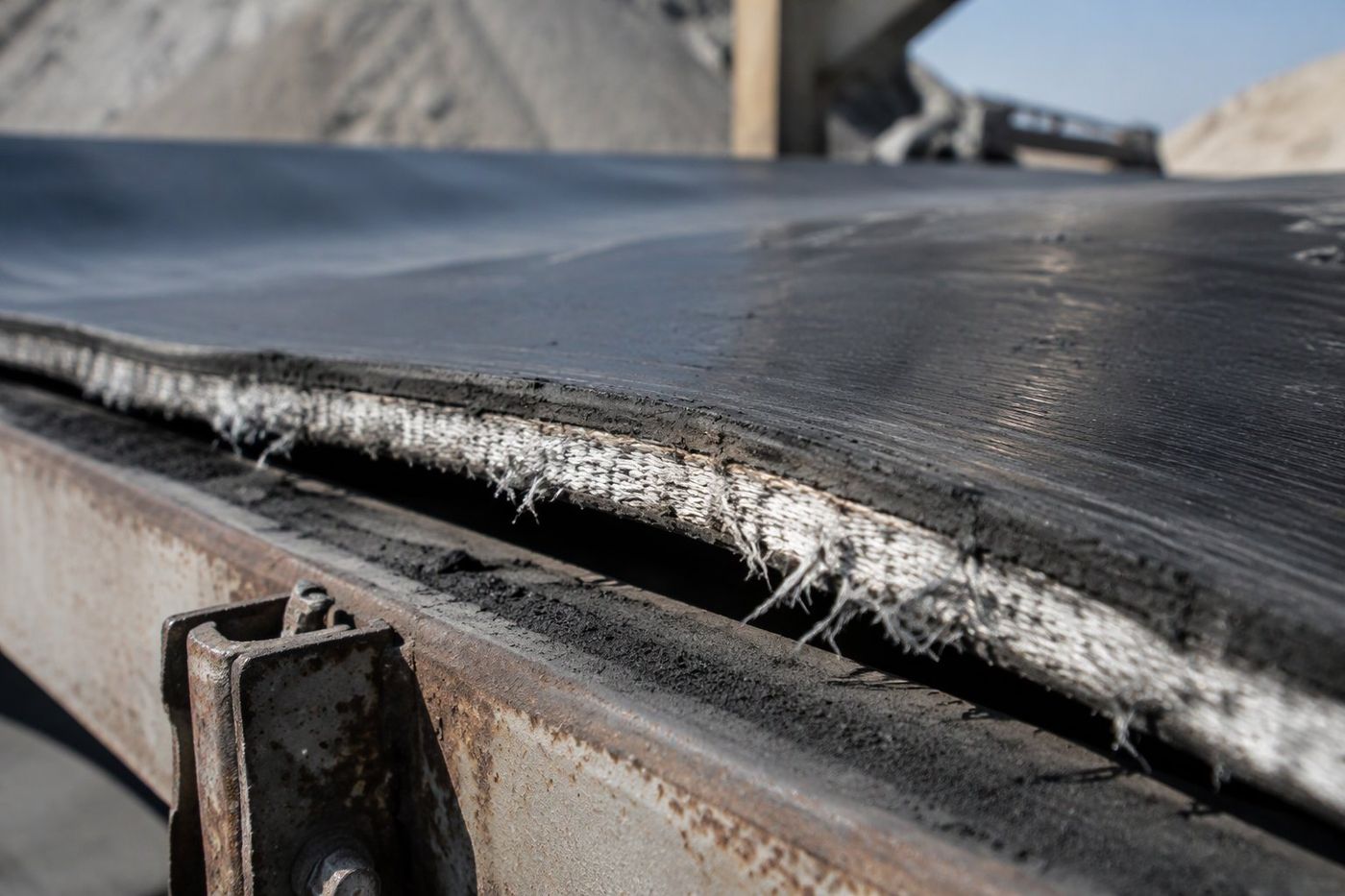
Quomodo mistracking apparet antequam cingulum laceret
Aequipes manutentionis saepe problematis obviam eunt ab improprio extremo. Cingulum iam ascendit pulley et materiam a latere iacit cum primum aliquis vocatur, sed indicia in structura per hebdomades fuerant.
Quattuor signa prima sunt quae operatores doceri debent ut referant:
- A polished or shiny strip along one edge, where the cover is being rubbed by the chute wall or the structure
- Fine black dust collecting under one side of the conveyor, from cover rubber being ground away
- One side of the return rollers worn or shiny, while the other side still has paint
- A belt that tracks true when empty and walks as soon as the load arrives
The seven causes, in the order to check them
Order matters more than the list. Working from the structure inward means each step removes a variable, and stops you from adjusting a roller to compensate for a skewed frame that will keep pulling the belt back.
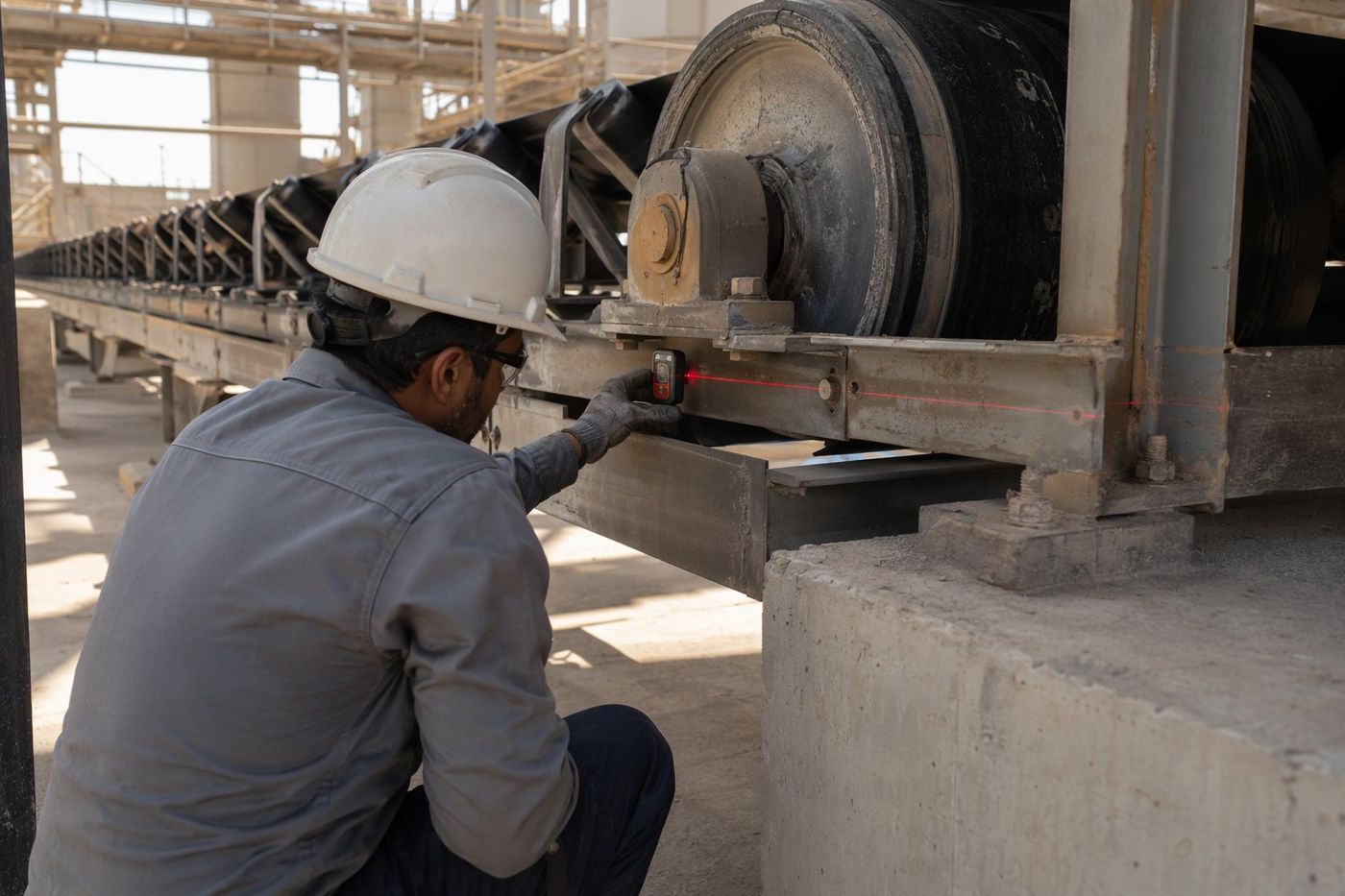
1. Structure and pulley alignment
Un frame de convoyeur qui n’est pas carré, une poulie d’extrémité ou de tête qui n’est pas perpendiculaire à la ligne centrale, ou une poulie réinstallée après un changement de roulement sans alignement correct entraînera systématiquement la courroie dans une seule direction, qu’elle soit chargée ou vide. Vérifiez ceci en premier lieu à l’aide d’un fil à plomb ou d’un laser le long des deux côtés du cadre. Si les poulies ne sont pas parallèles entre elles, aucun réglage des rouleaux tendeurs ne permettra de maintenir la courroie en position.
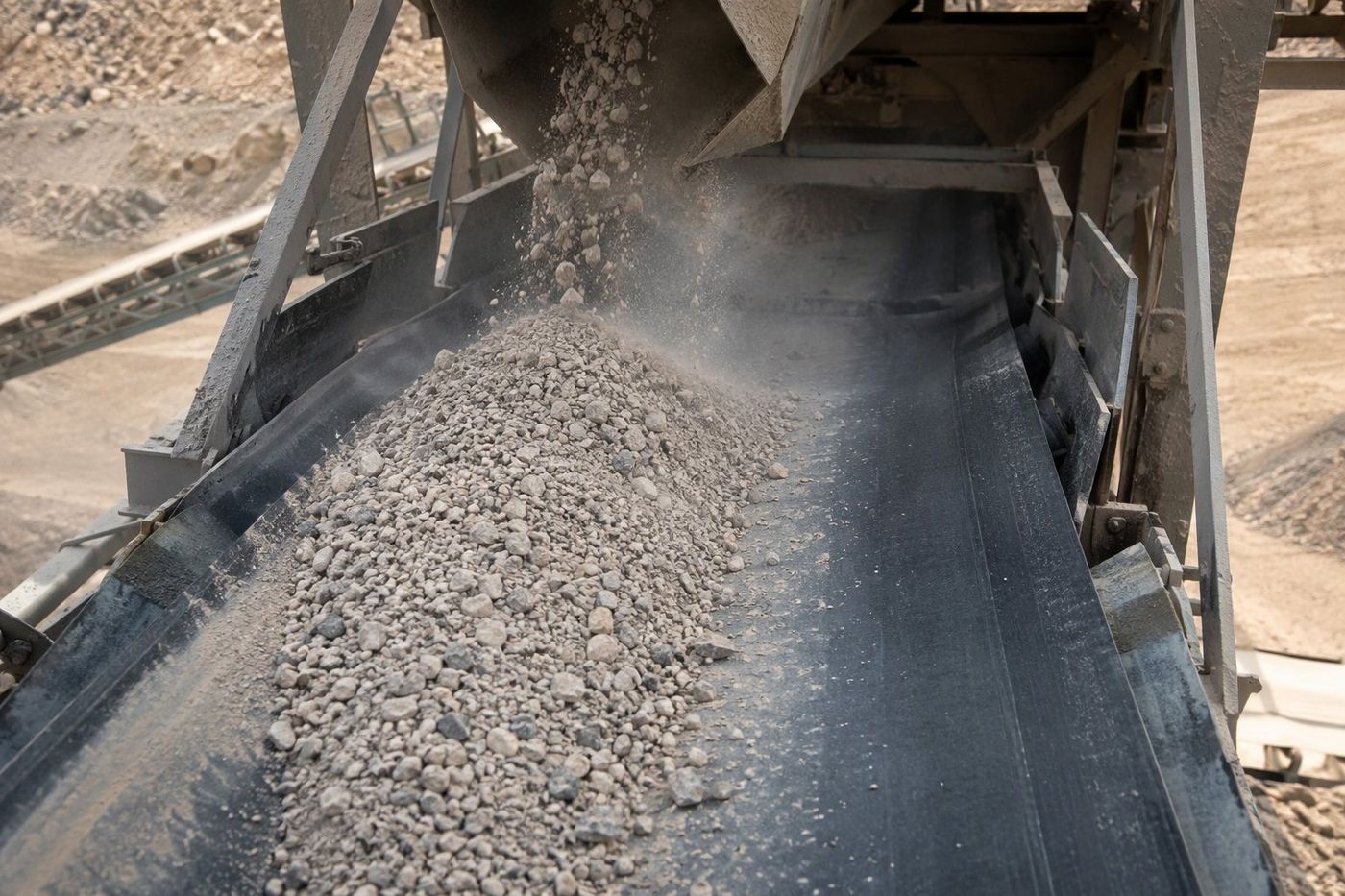
2. Chargement décentré
Lorsque le matériau heurte la courroie hors de son axe central, il la pousse latéralement ; la courroie revient ensuite à sa position initiale dès que le chargement cesse. Ce comportement — stable à vide mais dévié sous charge — indique un problème au niveau du trémie, des bords latéraux (skirtboard) ou de la position du convoyeur d’alimentation, et non de la courroie elle-même. La correction consiste généralement à repositionner une plaque déviateur, à corriger la géométrie du trémie ou à centrer l’alimentation afin que le matériau tombe sur le tiers central de la courroie.
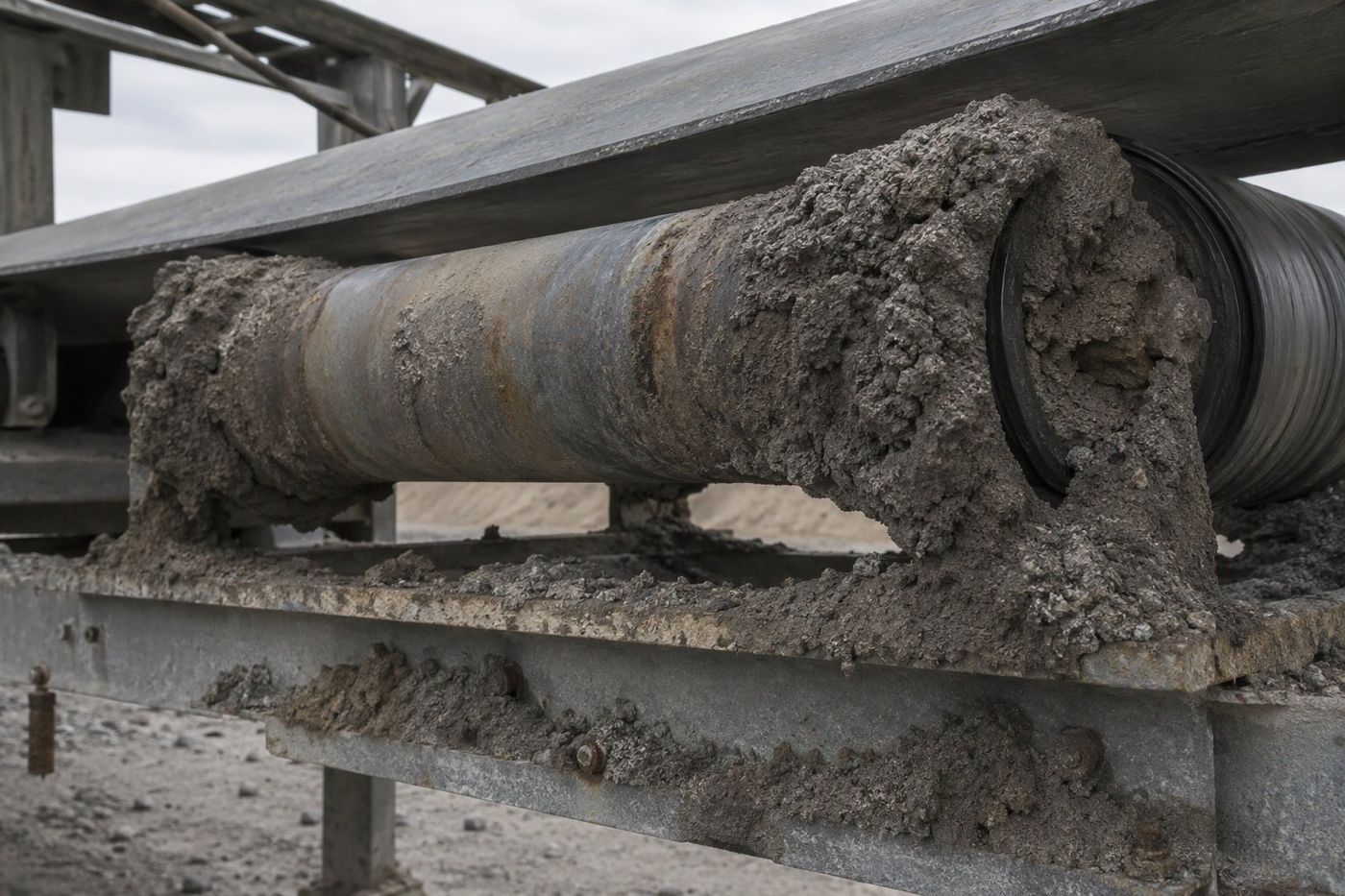
3. Accumulation de matériau
Materialum congelatum aut madidum in rullo redituro, in facie poli aut intra tabulam lateralem accumulans diametrum efficacem in una parte mutat. Polus cum accumulatione in uno extremo cingulum diriget quamdiu haec accumulatio manet. Haec causa frequens est in convectribus quae aggregata humida tractant, et post omne lavacrum aut pluviam tacite redit si dispositio purgationis cinguli inadquata est.
4. Rulli constricti, attriti aut inaequales
Rullus constrictus in unam partem quasi frenum efficitur. Ille qui lagging suum amiserit, aut series in qua unus tantum unitas altior sit quam vicinae, cingulum ad partem inferiorem inclinat. Hic etiam loci sunt ubi diversae altitudines ex annis substitutionum fragmentarum lente et perenniter derivatio causant, non subita vitium.
5. Curvatura cinguli et extremitates non quadratae
A belt that was never quite straight, or that was cut out of square during installation, has a built-in steering bias that shows up as a consistent walk toward one side across the whole length of the conveyor. Storage matters here too: a belt stored on its edge in a hot yard can take a set. Camber is measured by running a straight line along the belt and checking the deviation at the middle of each section.
6. The splice
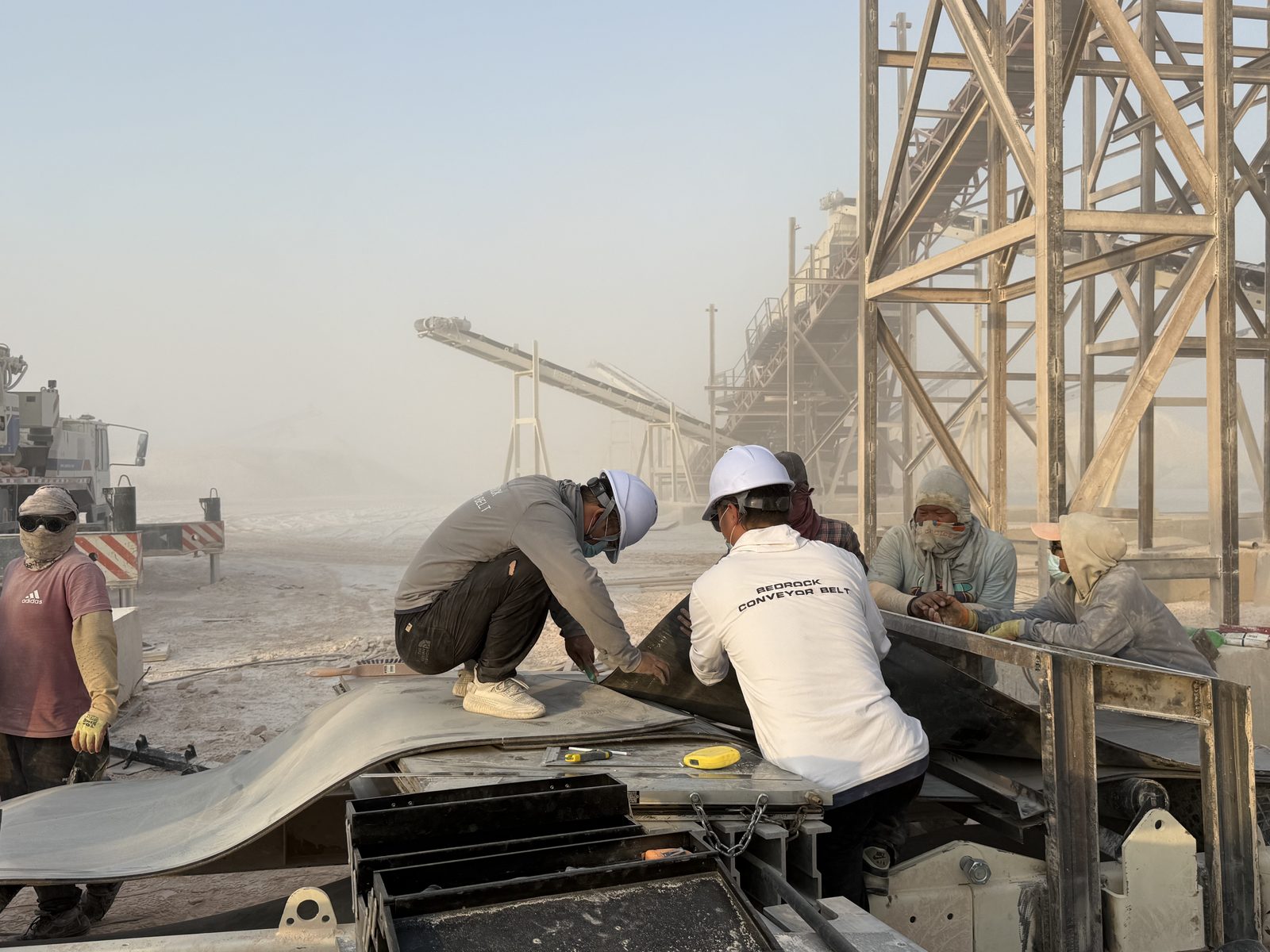
A hot vulcanized splice that is not square, or that has an uneven step, behaves like a short section of cambered belt passing the pulleys once per revolution. The belt walks a little at the joint and returns between joints. This is one of the reasons a joint should be laid out and cut against a line rather than by eye, and it is why a belt that tracks perfectly and then kicks once per lap is almost always a splice problem.
7. Tension and take-up
Tensio insufficiens permittit cingulo labare et errare; tensio inaequalis in turri gravitatis aut in visco tensore, ubi una pars cedat, totam viam cinguli inclinat. In cingulis longis, defectus tensionis et defectus structurae similes videntur ad polus caudalem, quare inspectio structurae prior est.
Cur coniunctura et ordo cinguli exitum decernunt
Duae partes cinguli damnum absorbent dum omnes adhuc adaptant: coniunctura et ordo. Coniunctura quae iterum et iterum trahitur oblique per structuram male alliniam fatigatur ad gradum et deficit antequam cingulum consumatur. Ordo qui teritur contra parietem chutae amittit tegumentum, deinde corpus, deinde cingulum.
Ideo cingulum cum constructione anti-lacerationis et coniunctura recte quadrata per tempus mistracking superat quod cingulum normale perdit: defectus moratur satis ut aequipe manutentionis causa invenire possit. The funiculus Conveyor Ante Lacerationem constructio est optio idonea ubi metallum vagum et contactus ordinis simul adsunt.
What mistracking actually costs
Nobody approves a budget line for conveyor belt alignment. The cost arrives in four places instead:
- Edge damage. The cover is ground away on one side, then the carcass is exposed to water and grit, and the belt is condemned long before its wear life is used up.
- Cleanup labor. Spillage off one side means a man with a shovel every shift, and a spillage pile that grows faster than it is cleared.
- Unplanned stops. A belt that walks far enough comes off the pulley, and that stop is measured in hours, not minutes.
- Collateral damage. Rollers, skirt rubber, chute liners and structure all wear faster when the belt is pushing against them sideways.
Count those four for one conveyor over a year before deciding that a day of alignment work is expensive. In most Saudi plants the arithmetic is not close.
The adjustment order that works
When a crew is sent to fix a walking belt, the instinct is to start moving idlers. That is the last step, not the first. Work in this order:
1. Stop the conveyor and clean every roller, pulley and skirtboard. Remove the variable you cannot see.
2. Check frame square and pulley alignment against a line. Correct the structure.
3. Correct the loading point so material lands centered, with the chute and skirtboard clear of the belt edge.
4. Replace or re-seat any seized, damaged or mismatched conveyor roller on the affected section.
5. Check tension and take-up, both sides.
6. Only now adjust training idlers, and adjust a small amount at a time, letting the belt run a full lap between changes.
7. If the belt still walks, measure camber and inspect the splice before touching anything else.
Causa huius ordinis simplex est: idler ad exercitationem contra obliquam structuram septimanae instar videtur operari, deinde vero deficit. Primo corrigere structuram significat idlerem parvam correctionem facere, quam designavit.
Quando desinere regulare et cingulum substituere
Regulatio est solutio minus cara, donec ipsum cingulum defectum sit. Tres conditiones significant cingulum esse consummatum, non autem male alligatum:
- Carcassus visibilis est secundum marginem, aut margines coepit disrumpi in textilium vel funiculum
- Coniunctio defecit plus quam semel in eodem gradu, aut nova coniunctio non potest quadrari quia extremitates cinguli iam non rectae sunt
- Cingulum camberem ostendit per plures sectiones, non unam tantum, et non potest recidi ad lineam rectam
In his casibus cingulum est causa mistracking, et continuare regulandum strcturam ac rotulos laedit dum vera correctio exspectat.
Quomodo BEDROCK tractat vocem de mistracking in Arabia Saudita
BEDROCK's technical team works from Dammam, with local spare parts held in the Kingdom and a service scope that covers belt survey, hot vulcanization splicing and on-site diagnosis. The on-site belt service page sets out the response terms, including remote technical consultation within 24 hours and a committed on-site arrival window for production-stopping failures.
Where the fault turns out to be the rollers rather than the belt, the heavy duty conveyor roller range covers mining and bulk material handling duty. Replacing a mixed set with a matched set is often the difference between a belt that holds its line and one that needs a training idler every few months.
Quaestiones Frequentes
Q: Why does my belt only run off when it is loaded?
That signature points to the loading point, not the belt or the idlers. Material landing off center pushes the belt sideways, and it recovers when the load stops. Check chute position, deflector plates and skirtboard clearance before adjusting anything.
Q: Num idler addestrativo correggeret un cinghia non alliniata?
Solamente si la struttura sottostante è già quadrata e la cinghia è dritta. Un idler addestrativo corregge un piccolo scostamento; non può mantenerla in posizione contro un telaio storto, una sezione inclinata o una giuntura non quadrata. Se usato per primo, nasconde il difetto e aumenta l'usura del bordo.
Q: Quante volte si deve controllare l'allineamento di una cinghia trasportatrice?
Ad ogni arresto, più ogni volta che un operatore segnala polvere lungo il bordo, fuoriuscita da un solo lato o una cinghia che appare fuori centro alla puleggia di coda. L'allineamento fa parte della manutenzione ordinaria della cinghia trasportatrice, non è un intervento straordinario a sé stante.
Fate un controllo di tracciamento prima che il bordo scompaia
Inviare la larghezza della cinghia, la lunghezza del trasportatore, una foto della puleggia di coda e una foto del punto di caricamento; il team vi indicherà quale delle sette cause verificare per prima su quel trasportatore. Se il bordo mostra già la carcassa, richiedere contemporaneamente un'ispezione completa della cinghia. Iniziare dal paginam contactus oppure inviare un messaggio al team di Dammam su WhatsApp.
📱 WhatsApp:+966 56 171 7029
✉️ Email: [email protected]
🌐 Situs: www.bedrockco.sa