 EN


Conveyor Belt Mistracking: Seven Causes and the Order to Fix Them
A conveyor belt mistracking problem is almost never a belt problem. It is a structure, loading or buildup problem that shows up at the belt edge, and the order in which you check the causes decides whether it is fixed in an afternoon or paid for twice this year.
Quick answer
- Check structure, loading and material buildup before touching a belt training idler. Most conveyor belt alignment faults start there.
- A belt that only walks when loaded has a loading problem, not an idler problem.
- If the edge is worn through to the carcass, adjustment will not save it. Plan the replacement.
What mistracking looks like before it tears a belt
Maintenance teams usually meet the problem at the wrong end. The belt is already climbing the pulley and throwing material off the side by the time anyone is called, but the evidence was on the structure for weeks.
Four early signs are worth training operators to report:
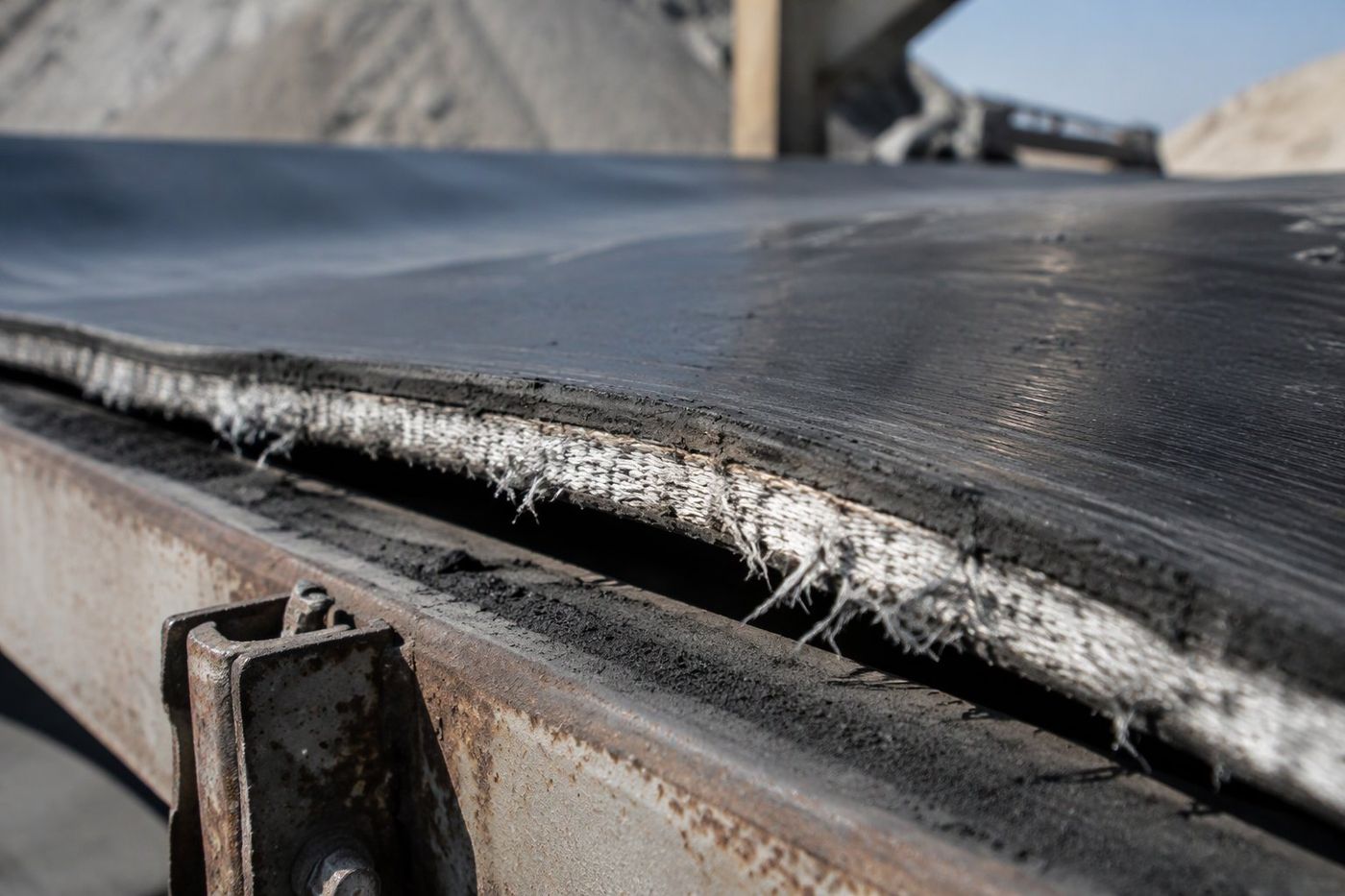
- A polished or shiny strip along one edge, where the cover is being rubbed by the chute wall or the structure
- Fine black dust collecting under one side of the conveyor, from cover rubber being ground away
- One side of the return rollers worn or shiny, while the other side still has paint
- A belt that tracks true when empty and walks as soon as the load arrives
The seven causes, in the order to check them
Order matters more than the list. Working from the structure inward means each step removes a variable, and stops you from adjusting a roller to compensate for a skewed frame that will keep pulling the belt back.
1. Structure and pulley alignment
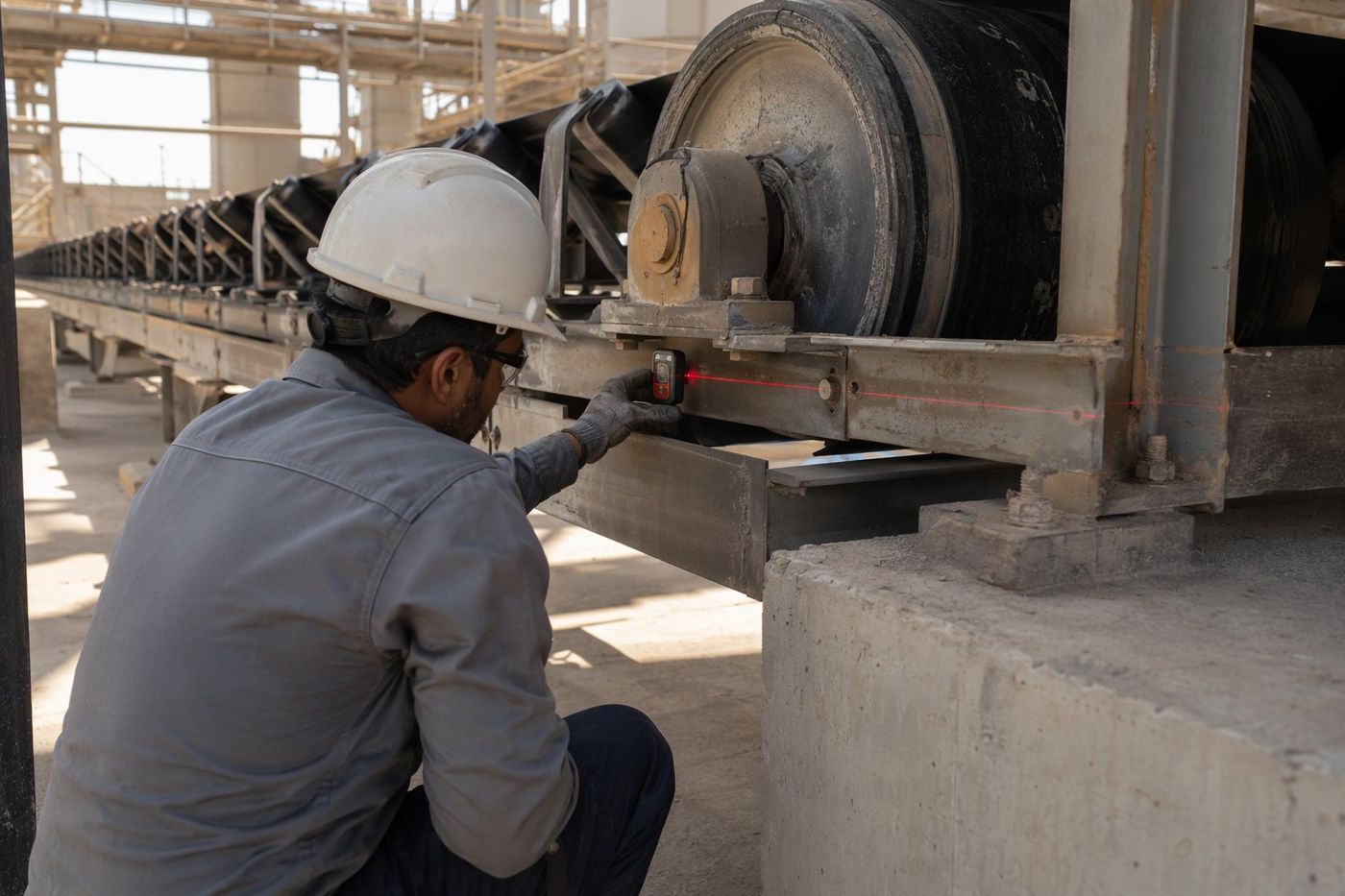
A conveyor frame that is out of square, a head or tail pulley that is not square to the center line, or a pulley that has been re-installed after a bearing change without alignment will pull the belt consistently in one direction, loaded or empty. Check this first with a string line or a laser down both sides of the frame. If the pulleys are not parallel to each other, no amount of idler adjustment will hold it in place.
2. Off-center loading
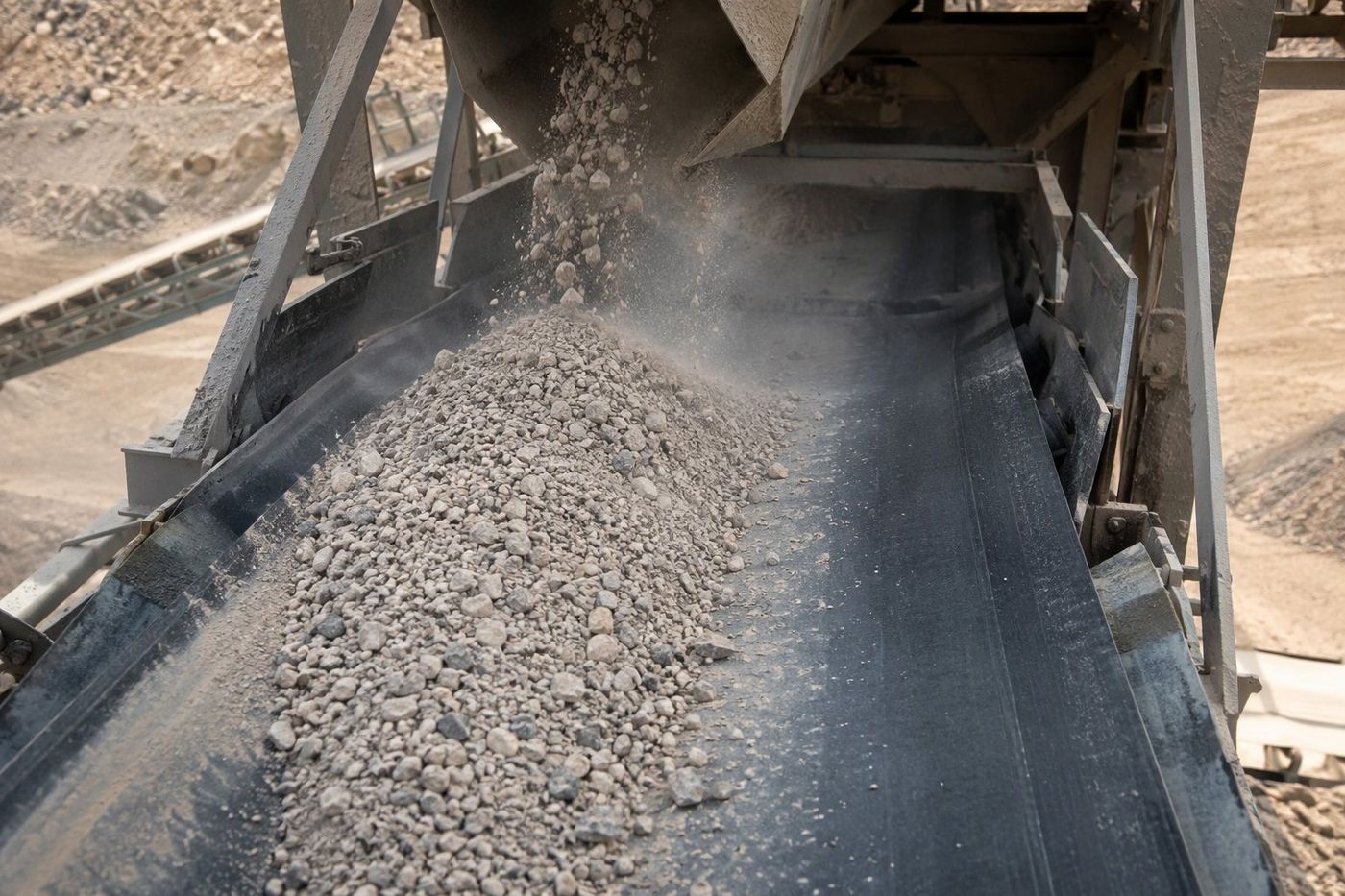
Material hitting the belt off center pushes it sideways, and the belt comes back once the load stops. That signature, true when empty and off when loaded, points at the chute, the skirtboard or the feed conveyor position, not at the belt. Fixing it usually means repositioning a deflector plate, correcting the chute geometry, or centering the feed so material lands on the middle third of the belt.
3. Material buildup
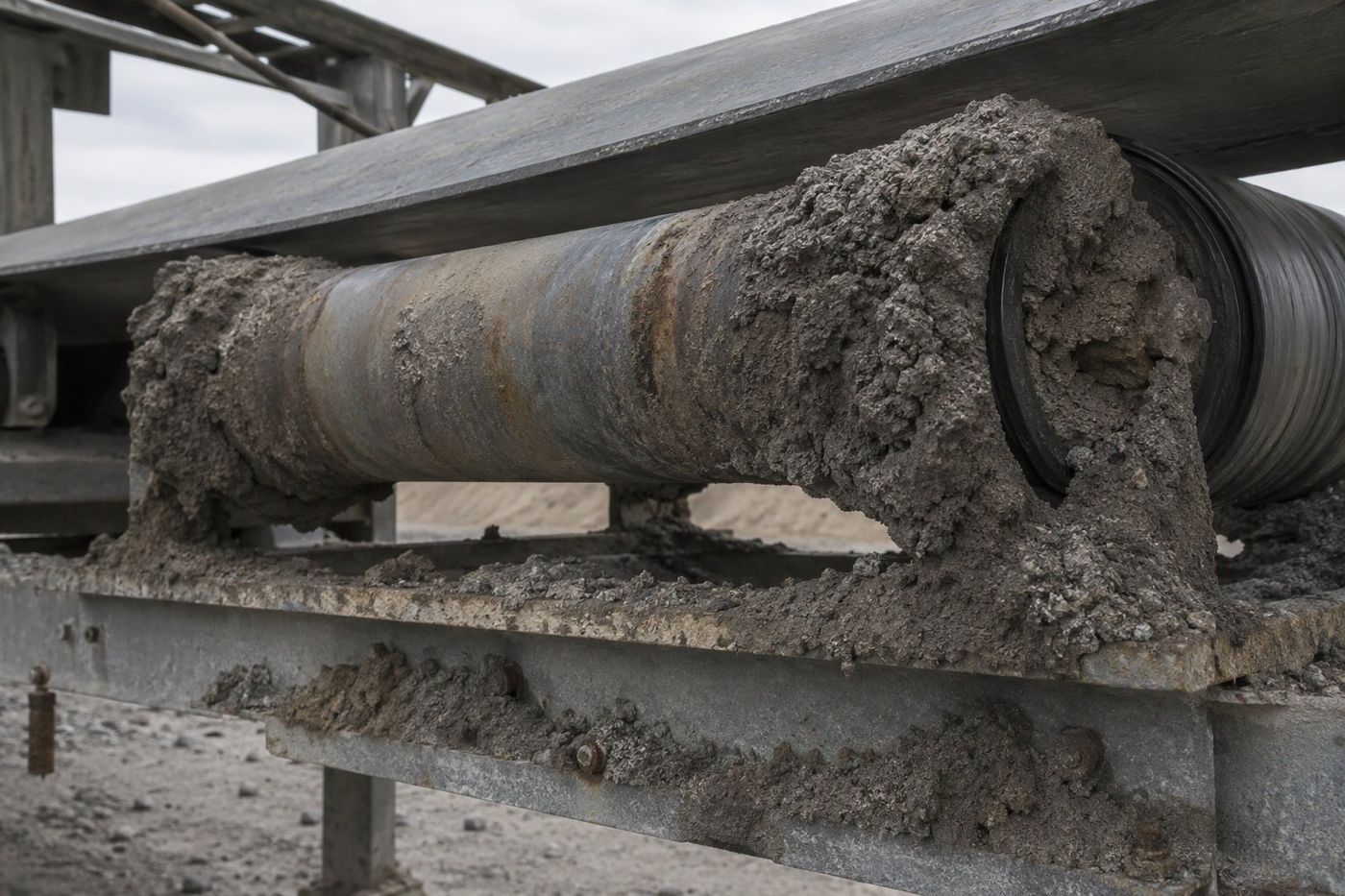
Frozen or wet material building up on a return roller, on the pulley face or inside the skirtboard changes the effective diameter on one side. A pulley with a buildup on one end will steer the belt for as long as the buildup is there. This cause is common on conveyors handling damp aggregate, and it returns quietly after every washdown or rain if the belt cleaning arrangement is inadequate.
4. Seized, worn or mismatched rollers
A seized roller becomes a brake on one side. One that has lost its lagging, or a set where a single unit sits higher than its neighbors, tilts the belt toward the low side. This is also where mixed heights from years of piecemeal replacement show up as a slow, permanent drift rather than a sudden fault.
5. Belt camber and out-of-square ends
A belt that was never quite straight, or that was cut out of square during installation, has a built-in steering bias that shows up as a consistent walk toward one side across the whole length of the conveyor. Storage matters here too: a belt stored on its edge in a hot yard can take a set. Camber is measured by running a straight line along the belt and checking the deviation at the middle of each section.
6. The splice
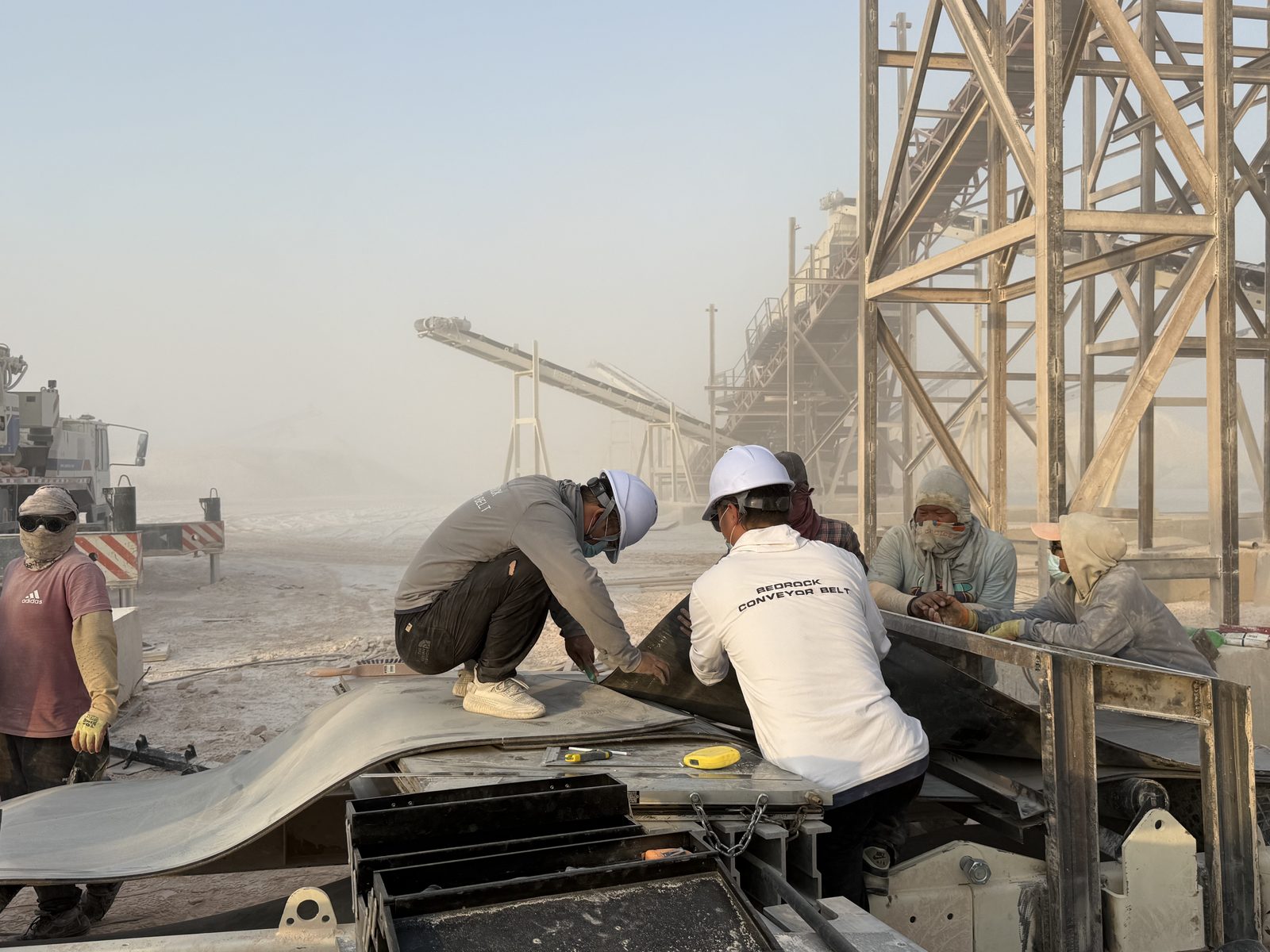
A hot vulcanized splice that is not square, or that has an uneven step, behaves like a short section of cambered belt passing the pulleys once per revolution. The belt walks a little at the joint and returns between joints. This is one of the reasons a joint should be laid out and cut against a line rather than by eye, and it is why a belt that tracks perfectly and then kicks once per lap is almost always a splice problem.
7. Tension and take-up
Insufficient tension lets the belt slip and wander; uneven take-up on a gravity tower or a screw take-up with one side lagging tilts the whole belt path. On long conveyors, tension faults and structure faults look alike at the tail pulley, which is why the structure check comes first.
Why the splice and the belt edge decide the outcome
Two parts of the belt absorb the damage while everyone is still adjusting: the splice and the edge. A splice that is repeatedly dragged sideways through a misaligned structure fatigues at the step and fails before the belt is worn out. An edge that is rubbed against a chute wall loses its cover, then its carcass, then the belt.
That is why a belt with an anti-tear construction and a properly squared splice survives a period of mistracking that would destroy a standard belt: the failure is delayed long enough for the maintenance team to find the cause. The anti tear conveyor belt construction is the relevant choice where tramp metal and edge contact are both present.
What mistracking actually costs
Nobody approves a budget line for conveyor belt alignment. The cost arrives in four places instead:
- Edge damage. The cover is ground away on one side, then the carcass is exposed to water and grit, and the belt is condemned long before its wear life is used up.
- Cleanup labor. Spillage off one side means a man with a shovel every shift, and a spillage pile that grows faster than it is cleared.
- Unplanned stops. A belt that walks far enough comes off the pulley, and that stop is measured in hours, not minutes.
- Collateral damage. Rollers, skirt rubber, chute liners and structure all wear faster when the belt is pushing against them sideways.
Count those four for one conveyor over a year before deciding that a day of alignment work is expensive. In most Saudi plants the arithmetic is not close.
The adjustment order that works
When a crew is sent to fix a walking belt, the instinct is to start moving idlers. That is the last step, not the first. Work in this order:
1. Stop the conveyor and clean every roller, pulley and skirtboard. Remove the variable you cannot see.
2. Check frame square and pulley alignment against a line. Correct the structure.
3. Correct the loading point so material lands centered, with the chute and skirtboard clear of the belt edge.
4. Replace or re-seat any seized, damaged or mismatched conveyor roller on the affected section.
5. Check tension and take-up, both sides.
6. Only now adjust training idlers, and adjust a small amount at a time, letting the belt run a full lap between changes.
7. If the belt still walks, measure camber and inspect the splice before touching anything else.
The reason for this order is simple: a training idler fighting a skewed frame will appear to work for a week and then lose. Fixing the structure first means the idler is doing the small correction it was designed for.
When to stop adjusting and replace the belt
Adjustment is the cheaper answer until the belt itself is the defect. Three conditions mean the belt is finished, not misaligned:
- The carcass is visible along the edge, or the edge has started to fray into the fabric or cord
- The splice has failed more than once at the same step, or a new splice cannot be squared because the belt ends are no longer straight
- The belt shows camber across several sections, not one, and cannot be trimmed back to a straight line
In those cases the belt is the cause of the mistracking, and continuing to adjust it damages the structure and the rollers while the real fix waits.
How BEDROCK handles a mistracking call in Saudi Arabia
BEDROCK's technical team works from Dammam, with local spare parts held in the Kingdom and a service scope that covers belt survey, hot vulcanization splicing and on-site diagnosis. The on-site belt service page sets out the response terms, including remote technical consultation within 24 hours and a committed on-site arrival window for production-stopping failures.
Where the fault turns out to be the rollers rather than the belt, the heavy duty conveyor roller range covers mining and bulk material handling duty. Replacing a mixed set with a matched set is often the difference between a belt that holds its line and one that needs a training idler every few months.
FAQ
Q: Why does my belt only run off when it is loaded?
That signature points to the loading point, not the belt or the idlers. Material landing off center pushes the belt sideways, and it recovers when the load stops. Check chute position, deflector plates and skirtboard clearance before adjusting anything.
Q: Will a training idler fix a misaligned belt?
Only if the underlying structure is already square and the belt is straight. A training idler corrects a small drift; it cannot hold it against a skewed frame, a cambered section or a splice out of square. Used first, it hides the fault and adds edge wear.
Q: How often should conveyor belt alignment be checked?
At every shutdown, plus any time an operator reports edge dust, spillage on one side or a belt that looks off center at the tail pulley. Alignment is part of conveyor belt maintenance, not a separate overhaul item.
Get a tracking check before the edge is gone
Send the belt width, the conveyor length, a photo of the tail pulley and a photo of the loading point, and the team will tell you which of the seven causes to check first on that conveyor. If the edge is already showing carcass, ask for a belt survey at the same time. Start from the contact page or message the Dammam team on WhatsApp.
📱 WhatsApp:+966 56 171 7029
✉️ 邮箱: [email protected]
🌐 网站: www.bedrockco.sa