EN
EN

Saudi Arabia Gypsum Plant Chevron Conveyor Belt Project | BEDROCK
Project Overview
A gypsum processing plant in Saudi Arabia required a more stable conveyor belt for an inclined material handling section connecting the crushing and storage areas.
The conveyor transported crushed gypsum and fine gypsum material on an inclined route. The previous flat rubber conveyor belt worked adequately on horizontal sections, but material rollback and spillage became increasingly noticeable as the conveying angle increased.
Fine gypsum particles accumulated around the conveyor structure, while larger pieces occasionally slipped backward on the belt surface. This required frequent cleaning around the conveyor and made it difficult to maintain a consistent material flow during continuous production.
After reviewing the conveying angle, material characteristics and existing conveyor configuration, BEDROCK recommended a C25 Chevron Conveyor Belt to improve material grip and conveying stability on the inclined section.
Project Information
Project Location: Saudi Arabia
Industry: Gypsum Processing / Building Materials
Conveyed Material: Crushed Gypsum and Gypsum Powder
Application: Inclined Conveyor from Crushing Section to Storage Area
Conveyor Belt Type: Chevron Conveyor Belt
Chevron Profile: C25
Belt Construction: EP Fabric Reinforced Rubber Belt
Belt Width: 800 mm
Recommended Belt Strength: EP400/3
Cover Thickness: 4+2 mm
Operating Condition: Continuous Inclined Material Handling
Typical Conveying Angle: Approximately 20–28°
The Challenge
Gypsum processing generates a mixture of irregular crushed material and fine powder. When these materials are transported on an inclined conveyor, a conventional flat conveyor belt may not provide sufficient surface grip.
The plant experienced several operating issues on the inclined section.
Fine gypsum material tended to move backward when conveyor loading increased, while larger particles occasionally rolled toward the lower section of the conveyor. Material was also accumulating along both sides of the conveyor structure.
The main problems included:
Material rollback on the inclined conveyor
Gypsum spillage around the conveyor frame
Irregular material flow toward the storage area
Frequent cleaning of accumulated gypsum powder
Reduced conveying efficiency during higher loading conditions
Difficulty maintaining stable production during continuous operation
Simply increasing belt speed was not considered an ideal solution because higher speeds could increase dust generation and material spillage.
The conveyor therefore required a belt surface capable of providing stronger mechanical grip while maintaining stable material flow.
BEDROCK Conveyor Belt Selection
Based on the conveyor layout and the characteristics of the gypsum material, BEDROCK recommended a C25 Chevron Conveyor Belt for the inclined conveying section.
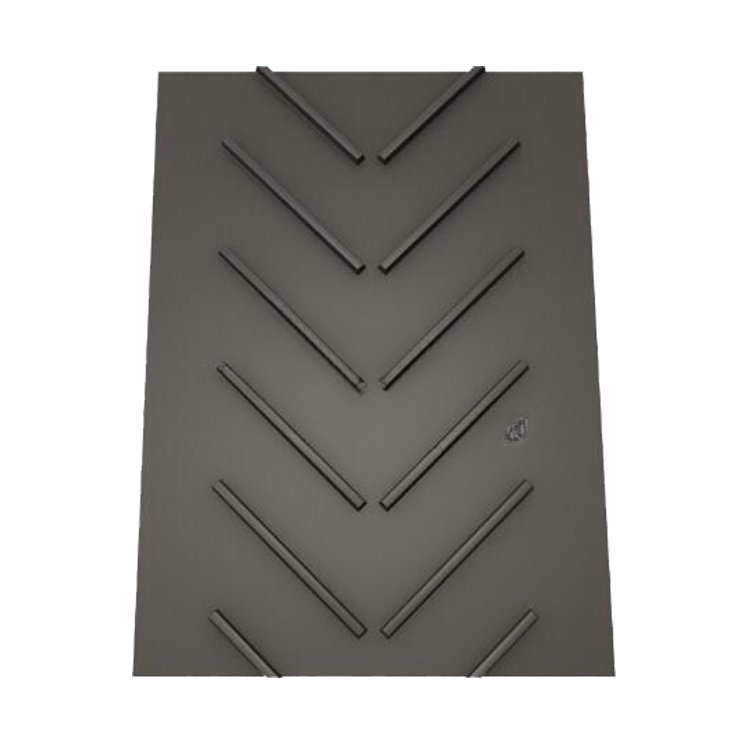
Unlike a conventional flat conveyor belt, the C25 belt uses raised rubber profiles approximately 25 mm high across the carrying surface.
These profiles help create additional contact and support between the conveyor belt and the conveyed material.
For crushed gypsum, this design helps reduce backward movement when the conveyor operates at an incline.
The recommended belt construction used an EP fabric carcass, providing a balance between tensile strength, flexibility and resistance to repeated loading.
A typical configuration for this application was:
EP400/3 · 800 mm · 4+2 mm · C25 Chevron Profile
The rubber cover was selected for normal abrasion resistance because gypsum particles and crushed material continuously contact the belt surface during operation.
Why C25 Chevron Profile Was Selected
Chevron profile height plays an important role in inclined conveying.
A very low profile may not provide sufficient grip for loose crushed gypsum, while an unnecessarily high profile can increase belt weight and may not be suitable for the existing conveyor structure.
The C25 chevron pattern provided a practical balance for this application.
Its raised pattern helps:
Hold crushed gypsum during inclined transportation
Reduce material rollback
Improve loading stability
Reduce material movement across the belt surface
Maintain more consistent material discharge
Support continuous operation under changing feed conditions
The open chevron pattern also allows fine particles to discharge more easily at the head pulley compared with heavily enclosed cleat designs.
Installation and Conveyor Adjustment
Installing a chevron conveyor belt alone does not completely solve inclined conveying problems.
The conveyor system was therefore reviewed together with the belt installation.
Attention was given to:
Belt Tension
Correct belt tension helps prevent slipping at the drive pulley while avoiding excessive stress on the fabric carcass.
Loading Position
Material was directed closer to the center of the conveyor belt to reduce side spillage.
Skirt Rubber Adjustment
The skirt sealing area was checked to prevent fine gypsum powder from escaping from the loading zone.
Roller Alignment
Carrying rollers were inspected to ensure that the belt remained centered during operation.
Belt Cleaning
The discharge and return sections were checked to reduce gypsum accumulation on the return side of the conveyor.
These adjustments allowed the chevron belt to operate more effectively without requiring major changes to the existing conveyor structure.
Operating Result
After the inclined section was equipped with the C25 Chevron Conveyor Belt, material movement became more stable.
The raised profiles provided additional support for both crushed gypsum and finer material during inclined transportation.
Operators observed less backward movement of material during normal loading conditions, while material accumulation beneath the inclined conveyor was reduced.
The improved material grip also allowed the conveyor to maintain a more consistent feed rate without relying on excessive belt speed.
The main improvements included:
More stable inclined conveying
Reduced gypsum rollback
Lower material spillage around the conveyor
Cleaner conveyor operating area
More consistent material feeding
Reduced manual cleaning around the inclined section
Improved overall conveyor stability
Rather than increasing conveyor speed or rebuilding the conveyor structure, changing the belt surface design provided a relatively straightforward way to improve the performance of the existing system.
Why Chevron Conveyor Belts Are Suitable for Gypsum Plants
Gypsum processing plants frequently use conveyors between crushing, screening, grinding, storage and production sections.
Where horizontal space is limited, inclined conveyors are commonly used to move material between different elevations.
For these applications, Chevron Conveyor Belts can provide better conveying stability than conventional flat belts.
They are particularly suitable for handling:
●Crushed gypsum
● Gypsum rock
● Limestone
● Sand
● Gravel
● Fertilizer
● Coal
● Wood chips
● Aggregates
● Other loose bulk materials
Different chevron heights and belt specifications can be selected according to the particle size, conveying angle, belt width and conveyor capacity.
BEDROCK Chevron Conveyor Belt Options
BEDROCK supplies chevron conveyor belts for quarrying, mining, cement, gypsum and bulk material handling applications.
Available configurations include:
Chevron Heights: C15 / C17 / C25 / C32
Belt Widths: Customized according to conveyor design
Fabric Strength: EP400 / EP500 / EP630 / EP800 and other specifications
Cover Thickness: Customized
Chevron Patterns: Open V, Closed V and customized profiles
Rubber Grades: General abrasion resistant and application-specific rubber compounds
The appropriate specification should be selected according to the conveyor inclination, material particle size, conveying capacity and operating environment.
For an existing conveyor, providing the current belt specification, belt width, conveying angle and material information allows the belt configuration to be matched more accurately.